Dietary Fats: What to Choose and What to Compare
By Derrick Inglut
Olive oil, salmon, butter, and a bag of nuts all contain fat. That does not make them interchangeable, and calling one food “healthy” does not tell you how much you are eating.
Two questions make the subject easier: what kinds of fat are in your usual foods, and how are you using those foods?
Think in substitutions
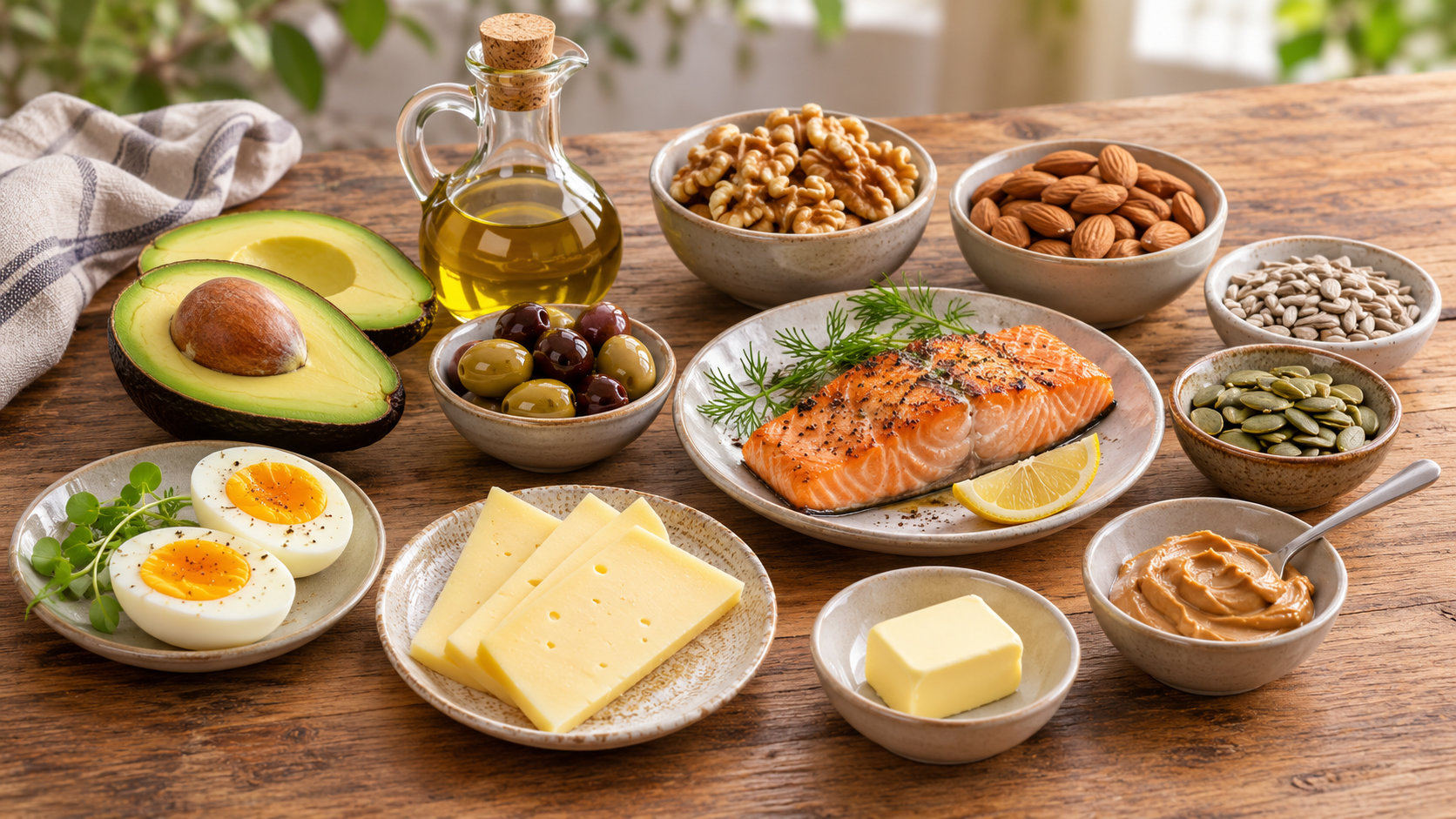
The American Heart Association recommends replacing saturated fats with unsaturated fats as part of a heart-healthy eating pattern. Foods such as nuts, seeds, fish, and olive oil can provide unsaturated fats.
The important word is replacing. Adding extra oil to an otherwise unchanged meal is a different decision from using it in place of another fat.
You do not need to turn breakfast into a chemistry lesson. Start with the foods you eat regularly and identify one substitution that fits your preferences and budget.
Make portions visible
Oil poured directly into a pan is easy to underestimate. The same is true of nuts eaten repeatedly from a large container. If the amount matters to your goal, put a portion in a dish or measure it occasionally to learn what your usual serving looks like.
This is a way to gather information, not a requirement to measure every meal forever. Use the amount of detail that helps rather than turning an ordinary lunch into an accounting exercise.
Build a meal rather than collecting “good” ingredients
A meal can include a useful protein source, vegetables or fruit, a carbohydrate food, and some fat. The balance depends on the person and the rest of the day.
Adding more supposedly beneficial ingredients does not automatically make a meal more suitable. What matters is whether it meets your needs and is something you can keep preparing.
Review the pattern over time
If you have high cholesterol or another condition requiring dietary treatment, follow your clinician’s or registered dietitian’s guidance. General fitness advice cannot establish your individual targets.
For more on putting the meal together, see carbs and training and fiber-rich meals. A useful food choice is one you understand well enough to repeat.
If you need help connecting everyday eating habits with your fitness goals, my personal training programs in Washington, DC include nutrition planning and accountability alongside coached workouts.
Adapted and updated from “Good Fats and Bad Fats — What’s the Difference?,” originally published in The Southwester, March 2011, p. 5.