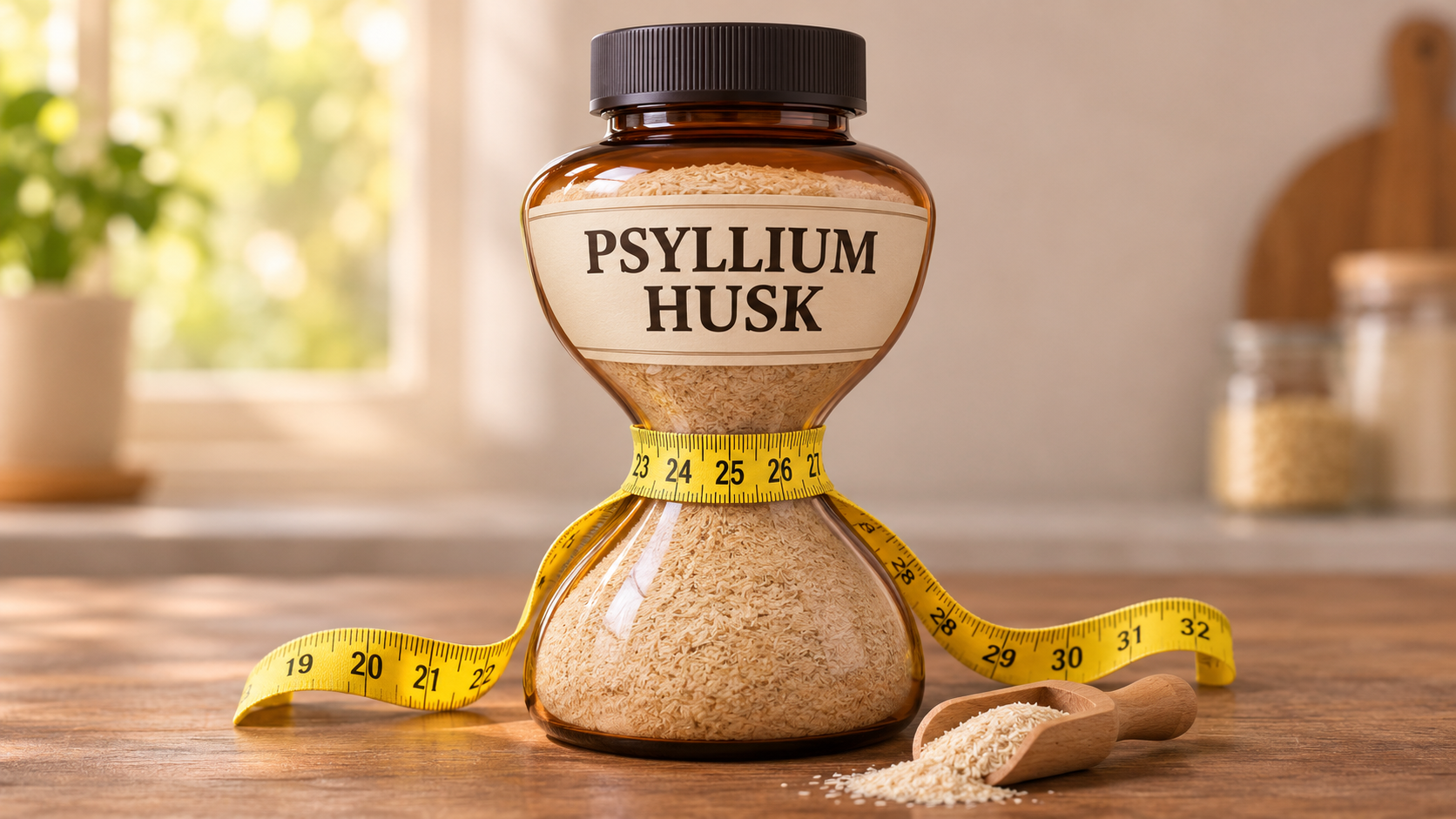
Psyllium Husk: The Natural GLP-1 Alternative
By Derrick Inglut
Before adding another diet product to the cupboard, look at what is missing from the meals you already eat. Fiber is often easier to work on there than through a complicated supplement routine.
The aim is to make meals more satisfying while supporting your nutrition and fitness goals.
Start with a food you already use
Fiber occurs in plant foods such as beans, vegetables, fruit, and whole grains. It supports digestive function, including helping prevent constipation. Some fiber-rich foods can also make a meal feel more substantial, although appetite varies from person to person.
Choose one change: add beans to a lunch bowl, put berries in yogurt, or try oats for breakfast. Keep the rest of the meal familiar while you decide whether the change suits you.
Soluble fiber, fullness, and GLP-1 medications
Soluble fiber attracts water and forms a gel during digestion. Viscous types, such as psyllium husk, swell as they absorb liquid and can slow digestion. Short-term clinical trials have found that psyllium can increase satiety—the feeling of fullness—and reduce hunger between meals.
If you are looking for a nonmedication approach to managing hunger, getting enough fiber is one practical place to start. Oats, beans, lentils, and certain fruits provide soluble fiber, while psyllium offers a supplemental source.
There is some overlap with the fullness people seek from GLP-1 medications, but the mechanisms and results are different. GLP-1 medicines act on hormone receptors involved in appetite and blood-sugar regulation and can slow stomach emptying. Fiber has not been shown to provide equivalent weight-loss benefits or replace prescribed treatment.
Think of soluble fiber as one tool for making meals more satisfying. Feeling fuller may help you manage your eating, but it does not guarantee weight loss.
Increase gradually
A sudden jump in fiber can bring gas and bloating. Add it over time and pay attention to fluids. If your clinician has given you fluid or dietary restrictions, follow that guidance.
There is no prize for adding every high-fiber food on the same day. A small change you tolerate is easier to keep than an ambitious one that makes you uncomfortable.
Always take psyllium with the amount of liquid specified on its label, never dry. Its ability to swell makes adequate fluid important for preventing choking or blockage.
Read the actual label
Two foods with similar packaging can have different fiber amounts. Compare the serving you will actually eat, not just the largest number printed on the front.
If you are considering a supplement, discuss the product and timing with a pharmacist or clinician, especially if you take medication. Psyllium can affect how some medicines are absorbed.
A fiber supplement is not a substitute for evaluating a persistent digestive problem.
Keep the rest of the meal useful
Fiber does not block all calories or make portion size irrelevant. Think of it as one part of a satisfying meal alongside an appropriate protein source and enough food for your needs.
If a recent food change has affected the scale, daily weight fluctuations deserve context too.
For help turning everyday food choices into a consistent routine, explore my personal training and nutrition planning in Washington, DC. We can connect your meals, workouts, and progress checks in one practical plan.
Adapted and updated from “Fiber could be stepping stone to a slimmer figure,” originally published in The Southwester, June 2011, p. 6.
Sources
MedlinePlus: Soluble and insoluble fiber
Clinical trials: Psyllium and fullness