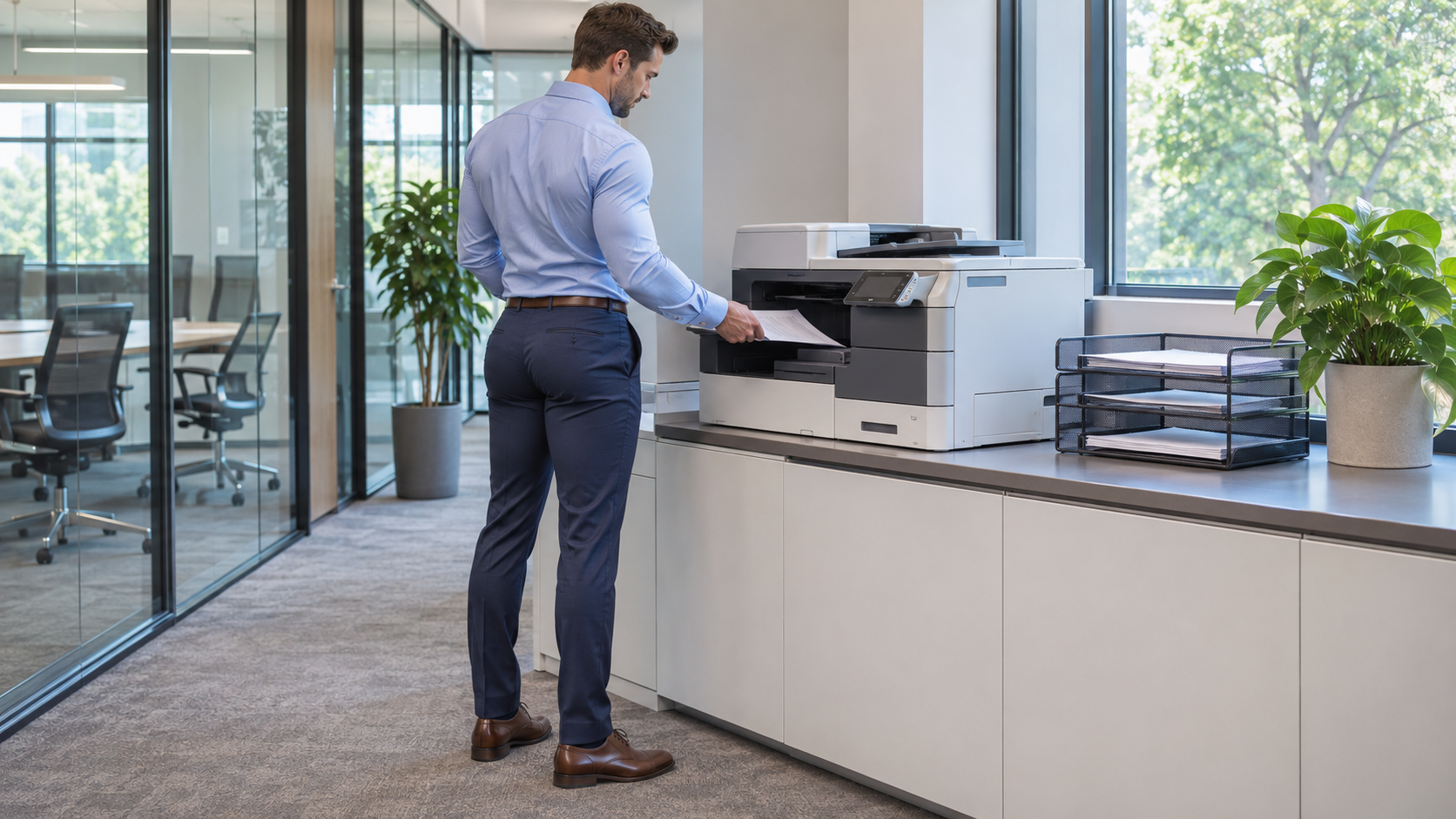
Staying Shredded In & Out Of The Office
By Derrick Inglut
You do not have to wait until the end of an eight-hour desk day to move. A few changes in position and a realistic strength routine give you more options than trying to sit perfectly until five o’clock.
Start by separating two jobs: getting out of a fixed position during work, and building capacity through exercise.
Put movement where the day already has a gap
Choose a repeatable cue: finishing a call, refilling water, or returning from lunch. Stand, take a short walk, or change tasks for a few minutes when practical.
For DC professionals, a walk before returning to the desk may be easier to maintain than a promise to make up all the day’s movement at night. The best cue is one you actually encounter.
Use equipment built for the task
My original article suggested pulling yourself up underneath a desk. I would now recommend proper exercise equipment instead. Desks can move or tip, and their edges are not designed as gym handles.
A securely anchored resistance band or a seated cable-row machine can offer a more controllable pulling exercise. Have the setup checked and choose resistance you can manage without jerking.
Build a small strength routine
Think beyond one supposedly corrective exercise. A suitable program can include a pull, a push, a squat or sit-to-stand, and a movement that teaches you to control your trunk. Your starting point determines the versions.
A functional personal trainer should explain how these choices relate to the tasks you want to do, rather than promise that one drill fixes every posture.
Do not diagnose pain from your chair
Sitting posture alone cannot tell you why your back hurts. Persistent, worsening, or unexplained pain deserves clinical assessment. Do not use an exercise article to work through symptoms that need individual care.
If you are comparing personal training near Dupont Circle, consider how appointments fit your commute. My private studio is downtown at 1150 18th Street NW. Explore my private personal training in Washington, DC for help building a strength routine around your work schedule and goals.
For another way to add movement to your day, read Cardio Intensity: Use the Talk Test. A lunchtime walk can be one part of a broader fitness plan.
Adapted and updated from “Get (Your) Back Into Shape,” originally published in The Southwester, June 2009, p. 9.